Uma Jenkins · 25 September 2026
Research Explores Connections Between Pixel Art Activities and Spatial Reasoning in Young Learners
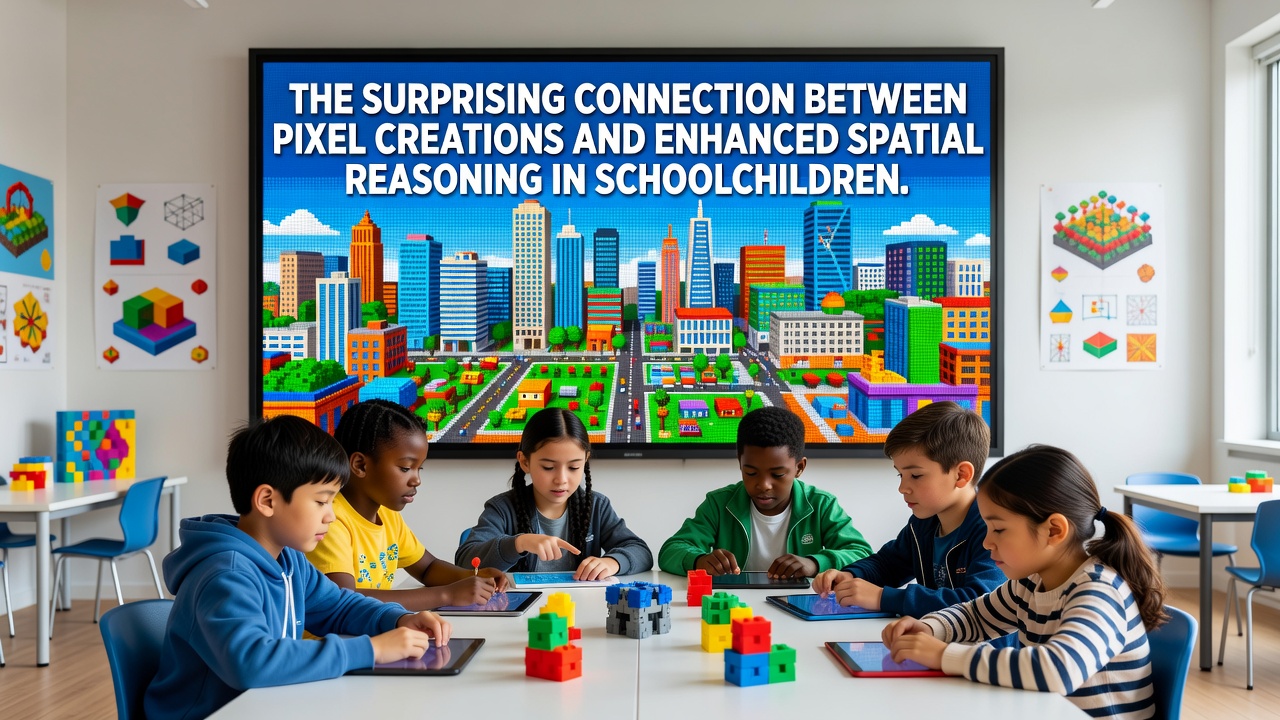
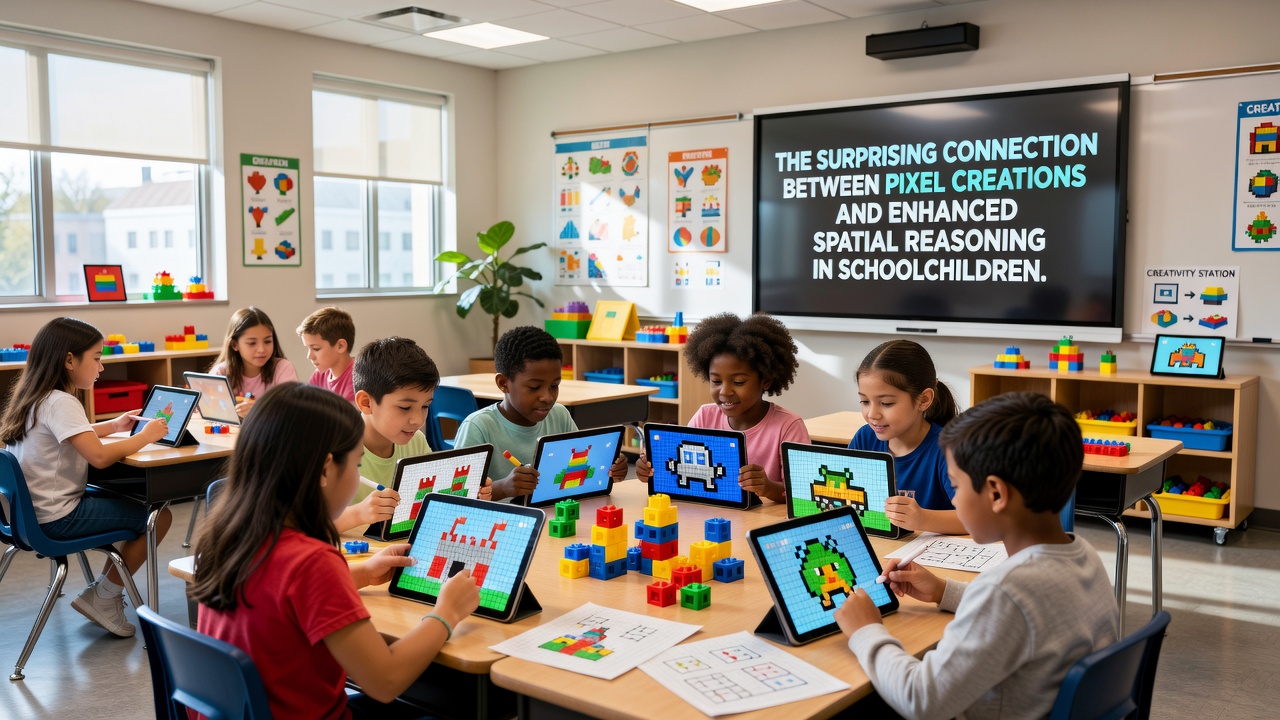
Pixel creations involve students building images on grids using small colored blocks, and researchers have documented measurable links to improvements in spatial reasoning abilities among schoolchildren aged eight to twelve. These activities require learners to plan arrangements, rotate shapes mentally, and estimate distances on two-dimensional surfaces, which align closely with core components of spatial skills measured in standardized assessments. Data from multiple classroom studies indicate that regular engagement with such tasks correlates with higher performance on tests involving mental rotation and visualization, while the structured nature of pixel work provides immediate feedback that helps children refine their approaches without direct teacher intervention each time.
Defining Pixel Creations in Educational Contexts
Pixel creations typically consist of grid-based designs where each cell represents a single unit of color, forcing participants to break down complex images into discrete elements. Teachers integrate these exercises into mathematics and art curricula because they combine visual representation with logical sequencing, and evidence from longitudinal observations shows participants develop stronger abilities to interpret diagrams and maps as a result. Programs using these methods have expanded in recent years, with implementations reported across European and North American schools that track progress through pre- and post-activity evaluations.
Evidence from Classroom Studies on Spatial Reasoning Gains
Multiple investigations conducted between 2023 and 2025 examined groups of students who completed weekly pixel-based projects over one academic term. Results revealed average score increases of 12 to 18 percent on spatial reasoning batteries compared with control groups that followed standard lessons without grid activities. One study coordinated across several Polish and German primary schools found particular strength in tasks requiring children to predict how shapes would appear after rotation, while another project in Canadian districts noted similar patterns when students manipulated virtual grids on tablets. These outcomes appear tied to the repetitive practice of aligning elements and adjusting positions based on visual constraints rather than abstract instruction alone.
What's interesting is how the process encourages trial-and-error adjustments within a bounded space, allowing learners to test hypotheses about proportion and symmetry in real time. Figures from the Australian Curriculum, Assessment and Reporting Authority highlight that schools incorporating grid design modules reported parallel rises in related competencies such as pattern recognition and measurement estimation. Students often progress from simple single-color outlines to multi-layered compositions, and observers note corresponding advances in their capacity to mentally unfold three-dimensional objects into two-dimensional nets.
Mechanisms Behind the Observed Improvements
The connection stems from repeated exposure to coordinate systems and scaling challenges inherent in pixel work. Each new row or column requires students to track relative positions while maintaining overall balance, which builds working memory capacity for spatial information. Researchers at several institutions have isolated these elements through controlled comparisons, finding that the discrete unit structure reduces cognitive load compared with freehand drawing yet still demands precise mental mapping. In September 2026, additional datasets from ongoing European Union-funded education pilots are scheduled for release, and preliminary summaries suggest the gains extend to related areas such as geometric problem solving when pixel sessions occur at least twice weekly.
Case examples include a group in a Finnish classroom that advanced from basic emoji-style icons to architectural floor plans rendered in pixel form, with accompanying tests showing enhanced performance on perspective-taking exercises. Similar patterns emerged in US districts where teachers logged participation rates alongside assessment scores, revealing consistent upward trends among students who sustained involvement over multiple months. The activity format also supports collaborative versions in which pairs negotiate color choices and placements, adding layers of communication that reinforce spatial vocabulary without shifting focus away from the core task.
Integration with Broader Curriculum Goals
Educators combine pixel creations with existing lessons on fractions, symmetry, and coordinate geometry to create cross-disciplinary experiences. National Assessment of Educational Progress reports from the United States indicate that classrooms emphasizing visual-spatial components alongside traditional computation see stronger overall mathematics outcomes, and pixel activities fit neatly into this framework because they make abstract concepts tangible through immediate visual results. Schools in Australia and Canada have adapted similar modules for remote learning environments, using shared digital grids that allow instructors to monitor individual contributions while preserving the hands-on element central to skill development.
Turnout data from regional training workshops show increasing adoption among teachers seeking low-cost methods to address documented gaps in spatial reasoning, which often appear early and persist without targeted practice. The approach remains flexible enough to scale from paper-based exercises using graph paper to software interfaces that export finished designs, maintaining the same underlying demands on visualization regardless of medium.
Conclusion
Available research establishes clear associations between structured pixel creation tasks and measurable advances in spatial reasoning metrics among schoolchildren, with effects appearing across varied educational systems and age groups. Continued monitoring through 2026 and beyond will clarify the duration of these benefits and optimal frequency of exposure, yet current evidence supports inclusion of grid-based activities as one component within comprehensive spatial skills instruction. Schools evaluating new resources can examine participation logs and assessment correlations to determine fit within existing programs.