Zoe Keller · 2 September 2026
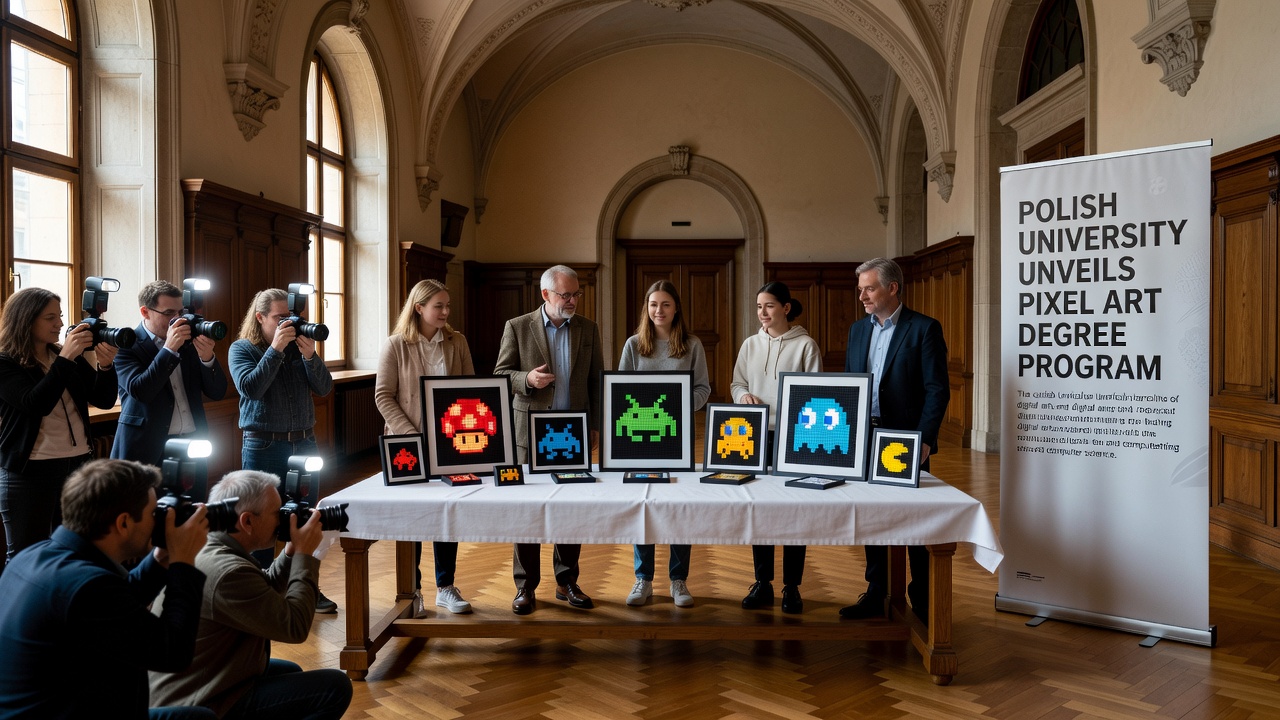
The University of Warsaw has announced the introduction of a new degree program focused on pixel art. This development represents an important step in integrating pixel art into formal higher education in Poland. The program is expected to attract students interested in digital creativity and retro gaming aesthetics.
Curriculum and Courses
Students enrolled in the program will engage with a comprehensive curriculum that covers essential pixel art techniques including dithering, shading, and animation. Courses on the historical context of pixel art from the 1970s onward will provide foundational knowledge. Practical sessions will involve using software tools like Aseprite and Photoshop for creating sprites and tilesets. The program also incorporates elements of game design to help students understand the functional aspects of their creations within interactive media. Faculty members include both academic researchers and professional artists with experience in major European game studios. Interdisciplinary modules will explore the intersection of art and technology, teaching students about file optimization and color limitations inherent to the medium. Regular critiques and exhibitions are planned to foster a community of practice among the cohort.
Professional Outcomes
Upon completion, graduates will be well positioned for careers in the video game industry, which continues to grow in Poland. Potential employers range from indie developers to established companies seeking talent in nostalgic art styles. The degree also opens doors to teaching positions in art schools or roles in digital marketing where pixel art is used for its distinctive visual appeal. The university has established connections with international pixel art communities to enhance networking opportunities for students. This program underscores the increasing academic recognition of pixel art as a serious artistic discipline with unique expressive potential. Additional emphasis is placed on portfolio development and collaborative projects that mirror industry workflows, ensuring graduates possess both creative and technical competencies demanded by employers.