Devon Vogel · 23 October 2026
Polish Students Use Pixel Techniques to Create Interactive Archives of Local Legends
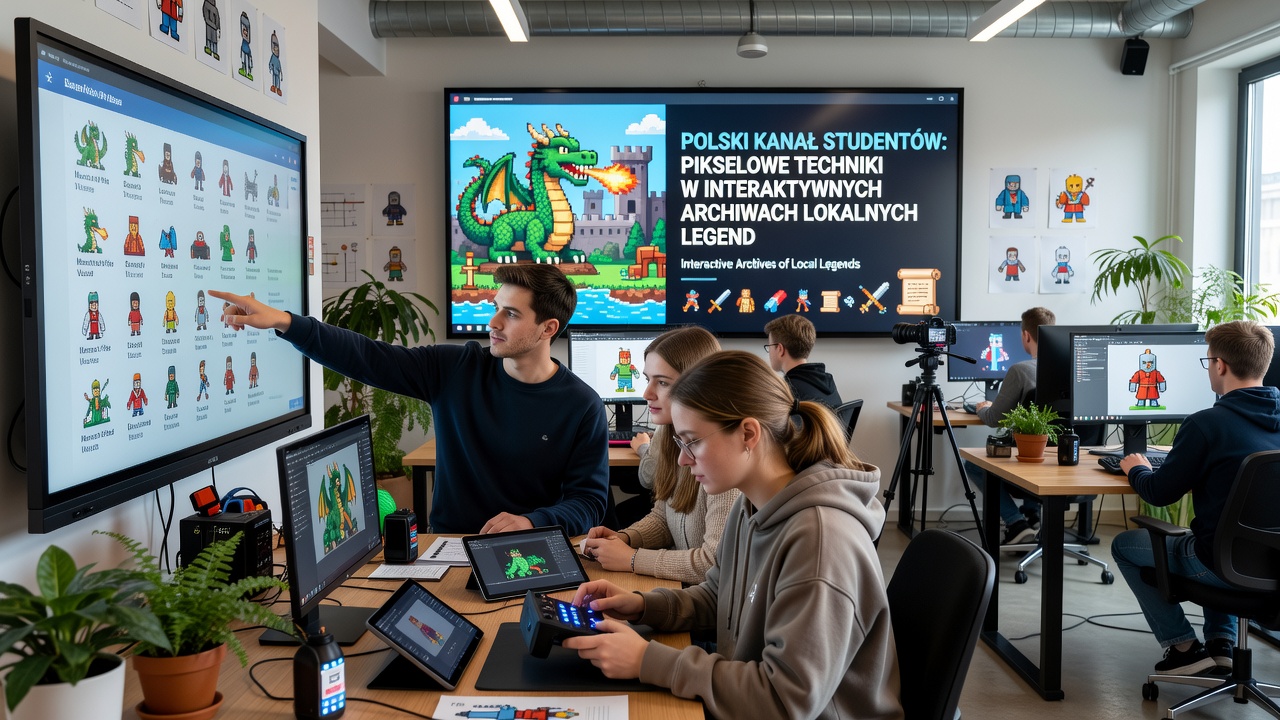
University programs across Poland have integrated pixel art methods into projects that convert regional folklore into interactive digital collections, and students at several institutions now combine limited color palettes with structured grids to build navigable scenes drawn from stories passed down in villages and towns. These efforts focus on legends tied to specific landscapes such as the Tatra Mountains or the Baltic coast, where characters and events receive representation through 8-bit and 16-bit style sprites that users can explore via simple point-and-click mechanics. Data from the Ministry of Culture and National Heritage shows increased enrollment in related digital media courses between 2023 and 2025, with participants reporting direct application of coursework to archive development. The approach draws on established pixel art constraints that limit each frame to small resolutions and few colors, yet these rules encourage precise placement of elements like forests, rivers, and mythical figures that match descriptions in oral histories collected by ethnographers. Students map narrative branches onto clickable hotspots, allowing visitors to trigger short animations or text excerpts that explain the cultural context behind each legend. One project documented in academic proceedings from the University of Warsaw detailed how a team reconstructed a 19th-century tale about a forest spirit by layering background tiles with foreground characters that shift position based on user selections. Techniques often begin with reference sketches derived from historical illustrations and field recordings, after which artists reduce forms to blocky shapes that retain recognizable silhouettes on low-resolution displays. Collaboration with computer science departments supplies the coding layer that turns static images into responsive environments, and libraries built in open formats permit export to web browsers without additional plugins. Research from the European Commission on digital cultural heritage indicates that such pixel-based systems require fewer storage resources than high-definition renders, which supports wider distribution among schools and libraries in rural areas. In October 2026 several participating universities plan to release expanded collections during a coordinated online event that coincides with European Heritage Days, and preliminary schedules list new entries drawn from Silesian mining legends alongside updated interfaces for existing Baltic sea stories. Participants have incorporated feedback loops where community members submit corrections to sprite details or suggest additional branching paths, and this process has produced iterative versions tracked through version control platforms. Further sections of the archives include searchable indexes organized by region and motif, with filters that isolate elements such as animal transformations or hidden treasures that recur across multiple tales. Students have tested these features with focus groups composed of local residents and schoolchildren, recording metrics on navigation time and recall accuracy that inform subsequent adjustments. According to reports from the Polish National Digital Archives, similar initiatives have contributed measurable increases in public engagement with digitized folklore materials over the past three years. 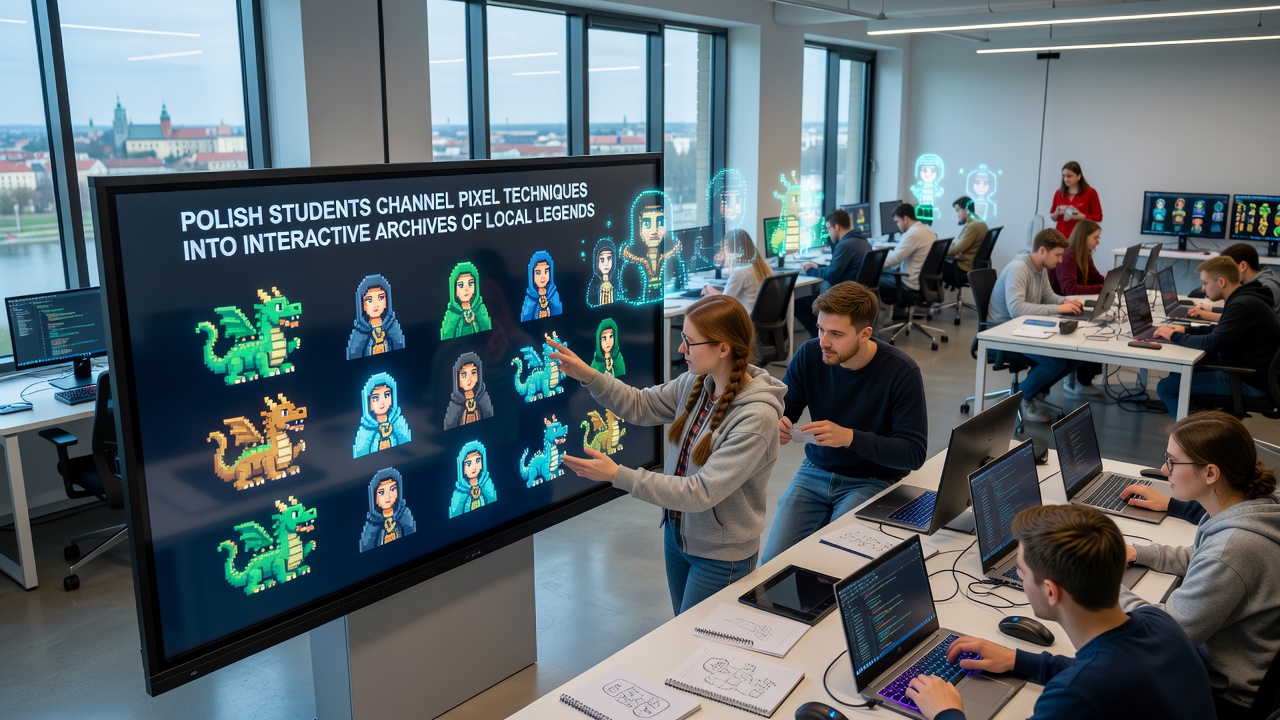 Additional technical refinements involve dithering patterns that simulate depth within the color limitations, allowing distant mountains or underwater sequences to appear layered without increasing file sizes. Instructors emphasize modular design so that individual tiles and sprites can transfer between different legend projects, which reduces redundant work and maintains stylistic consistency across the growing collection. Partnerships with regional museums supply verified source material, and students cross-reference pixel representations against museum artifacts to preserve accuracy in costume and architectural details. Data compiled by Statistics Poland reveals that digital access to cultural content rose sharply in the 18-24 age group during the same period, and university teams cite these figures when applying for continued funding. The pixel format also lends itself to adaptation for older hardware, including school computers still running legacy operating systems, thereby extending reach beyond high-bandwidth urban centers. Observers note that the combination of constrained visual language and branching interactivity creates engagement patterns distinct from linear video presentations, and preliminary studies conducted at the Jagiellonian University have begun measuring retention rates for specific legend elements after users complete sessions. These measurements track variables such as correct identification of symbolic objects and sequence recall, providing quantitative benchmarks that guide future iterations. Conclusion
The ongoing work demonstrates how pixel art methods translate directly into functional tools for cultural preservation, with Polish students producing archives that remain accessible across devices and connection speeds. Continued releases scheduled through 2026 will add further legends while refining the underlying interaction systems, and the modular structure supports contributions from additional regions without requiring complete redesigns.
University programs across Poland have integrated pixel art methods into projects that convert regional folklore into interactive digital collections, and students at several institutions now combine limited color palettes with structured grids to build navigable scenes drawn from stories passed down in villages and towns. These efforts focus on legends tied to specific landscapes such as the Tatra Mountains or the Baltic coast, where characters and events receive representation through 8-bit and 16-bit style sprites that users can explore via simple point-and-click mechanics. Data from the Ministry of Culture and National Heritage shows increased enrollment in related digital media courses between 2023 and 2025, with participants reporting direct application of coursework to archive development. The approach draws on established pixel art constraints that limit each frame to small resolutions and few colors, yet these rules encourage precise placement of elements like forests, rivers, and mythical figures that match descriptions in oral histories collected by ethnographers. Students map narrative branches onto clickable hotspots, allowing visitors to trigger short animations or text excerpts that explain the cultural context behind each legend. One project documented in academic proceedings from the University of Warsaw detailed how a team reconstructed a 19th-century tale about a forest spirit by layering background tiles with foreground characters that shift position based on user selections. Techniques often begin with reference sketches derived from historical illustrations and field recordings, after which artists reduce forms to blocky shapes that retain recognizable silhouettes on low-resolution displays. Collaboration with computer science departments supplies the coding layer that turns static images into responsive environments, and libraries built in open formats permit export to web browsers without additional plugins. Research from the European Commission on digital cultural heritage indicates that such pixel-based systems require fewer storage resources than high-definition renders, which supports wider distribution among schools and libraries in rural areas. In October 2026 several participating universities plan to release expanded collections during a coordinated online event that coincides with European Heritage Days, and preliminary schedules list new entries drawn from Silesian mining legends alongside updated interfaces for existing Baltic sea stories. Participants have incorporated feedback loops where community members submit corrections to sprite details or suggest additional branching paths, and this process has produced iterative versions tracked through version control platforms. Further sections of the archives include searchable indexes organized by region and motif, with filters that isolate elements such as animal transformations or hidden treasures that recur across multiple tales. Students have tested these features with focus groups composed of local residents and schoolchildren, recording metrics on navigation time and recall accuracy that inform subsequent adjustments. According to reports from the Polish National Digital Archives, similar initiatives have contributed measurable increases in public engagement with digitized folklore materials over the past three years.
Additional technical refinements involve dithering patterns that simulate depth within the color limitations, allowing distant mountains or underwater sequences to appear layered without increasing file sizes. Instructors emphasize modular design so that individual tiles and sprites can transfer between different legend projects, which reduces redundant work and maintains stylistic consistency across the growing collection. Partnerships with regional museums supply verified source material, and students cross-reference pixel representations against museum artifacts to preserve accuracy in costume and architectural details. Data compiled by Statistics Poland reveals that digital access to cultural content rose sharply in the 18-24 age group during the same period, and university teams cite these figures when applying for continued funding. The pixel format also lends itself to adaptation for older hardware, including school computers still running legacy operating systems, thereby extending reach beyond high-bandwidth urban centers. Observers note that the combination of constrained visual language and branching interactivity creates engagement patterns distinct from linear video presentations, and preliminary studies conducted at the Jagiellonian University have begun measuring retention rates for specific legend elements after users complete sessions. These measurements track variables such as correct identification of symbolic objects and sequence recall, providing quantitative benchmarks that guide future iterations. Conclusion
The ongoing work demonstrates how pixel art methods translate directly into functional tools for cultural preservation, with Polish students producing archives that remain accessible across devices and connection speeds. Continued releases scheduled through 2026 will add further legends while refining the underlying interaction systems, and the modular structure supports contributions from additional regions without requiring complete redesigns.