Zoe Keller · 2 September 2026
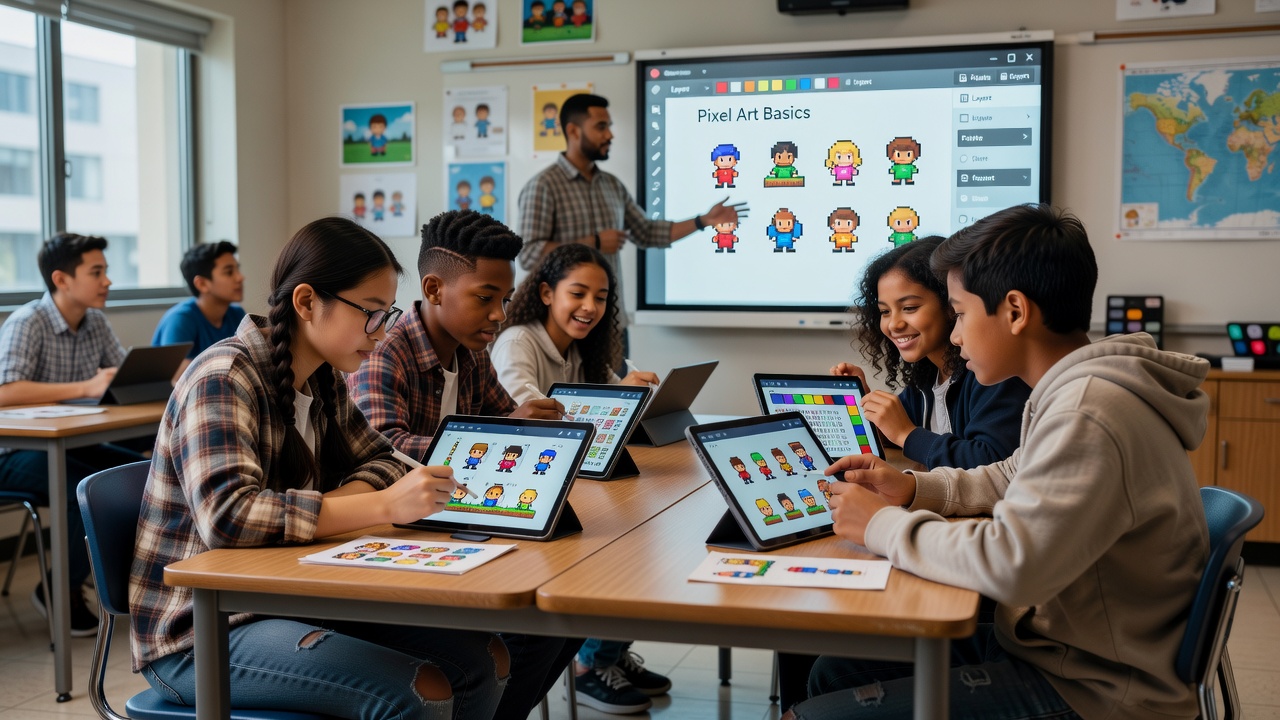
The recent release of a new open-source tool designed specifically for pixel art education is expected to significantly enhance teaching practices in schools and universities. This software, created through international collaboration, addresses common challenges faced by instructors when introducing students to the fundamentals of pixel art creation and design principles. By providing free access to advanced features, it democratizes the learning process and encourages more widespread adoption of pixel art in digital media courses.
Key Features Supporting Educators
Among its primary features are an extensive library of templates, automated feedback mechanisms for student work, and tools for tracking progress over time. Instructors can utilize these to design engaging lessons that cater to diverse learning styles. The platform also supports export options for various formats, facilitating easy sharing of projects among peers and with external audiences. Community forums integrated within the tool allow for knowledge exchange and troubleshooting, building a supportive network for both teachers and learners. Furthermore, the tool incorporates elements of gamification to maintain student interest, such as achievement badges and collaborative challenges. This approach has been shown to increase motivation and completion rates in preliminary tests conducted in academic environments.
Broader Implications for Curriculum Development
Schools implementing this tool have noted improvements in student outcomes, particularly in areas requiring precision and attention to detail. The structured learning paths help beginners progress quickly while offering advanced users opportunities to explore complex techniques like dithering and animation sequences. Researchers suggest that such resources could standardize pixel art education, leading to more consistent skill levels among graduates entering creative industries. Looking ahead, developers plan to add modules focused on professional applications, including integration with game engines and virtual reality environments. This evolution promises to keep the tool at the forefront of educational technology in the arts. Continuous input from the user base ensures adaptations meet emerging needs in the field of pixel art instruction.